

Călinești patron-saint feast
„Saint Nicholas" church, Călinești village
The feast of the church's patron — a service, festive tables and gatherings of villagers with those who have come home.
Three villages joined, with living traditions, solid farming potential and hard-working people, in the north-west of the Republic of Moldova.
Set in the north-west of the Republic of Moldova, in Fălești district, Călinești commune lies about 144 km from Chișinău, 57 km from Bălți and 22 km from the town of Fălești. It brings together the localities of Călinești, Chetriș and Hîncești over a total area of about 9,550 ha, with some 3,219 inhabitants — Călinești 1,633, Chetriș 967 and Hîncești 619. The clover in the commune’s identity stands for the three united villages, its shapes drawn from the course of the river Prut.
The seat of the town hall, the „Gh. Vrabie" gymnasium, two kindergartens, the house of culture, the library and the volunteer fire station.
The „Muguraș" kindergarten, the public library and a CUPS centre serving citizens.
The „Albinuța" kindergarten, the cultural centre and the public library, with living cultural traditions.
Each village has its own date of birth in the records — 1429, 1772 and 1803 — and its own road, up to the union of 2025.
The oldest of the three villages. Today’s name comes from Calinouți, as it appears in a princely charter almost six centuries old. But people lived in these parts long before the document that gave them a name.
They worked the land and raised cattle. They built wooden houses of one and two storeys, their walls daubed with clay, and they were potters — they decorated their vessels with bands painted white on a red ground.
After the Roman conquest of Dacia two villages formed here, trading with the cities of the Empire. A well-off local buried 346 Roman silver coins from the time of the emperor Antoninus Pius beside a mound at the edge of the village — plainly, on the eve of an invasion. The villages burned when the Huns came.
Alexandru cel Bun gives his wife, Princess Marena, „the village of Calinouți”. The document is kept in M. Costăchescu’s collection, and the historian Al. Gonța shows that Calinouți is Călinești itself.
After almost two centuries of silence, on 12 March the ruler Ieremia Movilă confirms the village to the grandsons of Drăghici Romîșcel. There follows a century in which the estate passes from hand to hand — from Gramă and Catrina Canta to Manuk-bei.
On 19 June, nineteen householders from Călinești, Drujineni and Hîncești, with their wives and children, rise against the border guards who had been watching the Prut frontier for a year, tie up five Cossacks and cross the river on three rafts, helped by people on the other bank. The next day the Cossacks were set free. A year earlier the village’s first church had been raised, in wood.
An archive document records that the village never had as many people of 100 years as then — nine. Among them Maria Ababii, Ion Grosu, Vasile Pascaru and Maria Ungureanu.
First the parish church school, then the ministerial one, of a single class. The teacher Natalia Agapiev taught 22 pupils on her own and looked after the library as well — 171 books. Since then the village school has given the country more than 3,000 graduates.
Hundreds of Călinești men were driven to the front and met their death in foreign lands. The names of those killed in the fighting are inscribed on the monument surrounded by ornamental trees beside the palace of culture. The book kept them as they stand on the stone — with the initial of the first name:
After the war came the great famine, then the deportations: 27 families from Călinești were taken to Siberia — whole families, with five or seven children each. The book that remembers them notes that the authorities were in no hurry to record the calamity: an exact list of the village’s deportees is missing to this day.
Of the 27 families, the book manages to name seven:
The State Coat of Arms of the Republic of Moldova, adopted in 1990, numbers among the authors of its conception and execution Gheorghe Vrabie, born in Călinești. The village gymnasium bears his name today.
Călinești commune — until then made up of the villages of Călinești and Chetriș — joins willingly with Hîncești. It is the first voluntary amalgamation in the Republic of Moldova, and Călinești remains the administrative centre, now of three villages.
The names of places. The village’s history also speaks through its micro-toponyms: Hîrtopul Ganului, Fîntîna de Curte, Fîntîna Doamnei, the La Tureatcă pond, the La Șuvăț woods. The „Fîntîna Doamnei” spring was painted by Gheorghe Vrabie himself, a son of the village.
„Generally, the old people say, Chetriș is called Chetriș because it appeared on a stony and sandy place.” Over its two and a half centuries the village has also borne the names Chetroasa, Chetros, Petriș and Chitriș.
On the left bank of the river archaeologists came upon the hearth of an abandoned village, inhabited several times over the millennia. There one finds pieces of burnt clay, broken pots and bowls, animal and human bones — between the 10th and the 13th centuries there was a cemetery here.
The locality appears in the records with 23 households. Then it disappears again from written attention, for three decades.
It reappears in the records as monastery property. Ten years later it had a church of wattle daubed with clay, and belonged to Iași county.
Here the priest Matvei Sinchevici found refuge, a widower, fled from the village of Cuconești with his five-year-old daughter and nothing but some saddlebags. The book observes drily: „Why he had fled matters less — what matters is the new attestation of Chetriș on that occasion”.
A small village, adding two or three dugouts a year. To Ciuciulea, the largest settlement in the north, one walked an hour and a half.
„This is roughly how the village crosses the frontier of the 19th and 20th centuries.” Two decades later the Romanian institution „Casa Noastră” grants 176 inhabitants 659 ha of land — and life seemed to set off in a new channel.
Forty-two men of Chetriș fell in the war — „the war of 1941–1945 comes down like fire upon Chetriș”:
Then came the famine, in which many villagers died of hunger, and then the deportation of the family of Mihail Cumpănici, with his wife and two sons. „Not long after that, collectivisation came down on people’s heads too.”
A hospital appears in the village, and a decade later a few service workshops. Today the village still stands in a „string of villages threaded like beads on a road”, along the Prut.
After the collective farms broke up, the peasants received their land shares. Most chose not to work them separately: they joined together in „Gruprijor-Agro” SRL and work in common.
Chetriș does not join Călinești — it was already its village, in the same commune. In 2025 Hîncești joins them, in the first voluntary amalgamation in the Republic of Moldova. The village once measured in hours of walking to its neighbours has its own CUPS desk today, three kilometres from the centre of the commune.
A village on the Prut, between Călinești and Drujineni, which for a good while was called Niorcani. Behind the settlement the vineyards climb the hills; in front spreads the wide meadow between the Camenca and the Prut, „patched with ponds rich in fish”.
The village is recorded in the Uricarul — though as a human hearth it had existed long before. It remained modest and small for a long time, often haunted by disease.
So Zamfir Arbore records it in the Geographical Dictionary of Bessarabia: a village in the valley of the Prut, between Călinești and Drujineni, part of the Balatina volost. „There are vineyards and orchards.”
Of the 323 children of school age, 117 attended the lessons, taught by Alexandru Ursache and Constanța Mihalache.
The Second World War cut short the lives of 21 men of this „peaceful little village on the Prut”. Their names are entered in the chronicle of military glory — the youngest, Leon Catană, was twenty.
For other villagers the war went on into peacetime days: they were carried in bolted wagons as far as the Siberian region of Kurgan:
Divided into two brigades, the people of Hîncești built up for decades the wealth of the „Pogranicinik” („The Border Guard”) collective farm in Călinești — gaining a nursery, a club with a film projector, a medical point and an eight-year school. At the end of the century the village church returned to the service of God.
Until the administrative-territorial reform of 2002, Hîncești belonged to the Călinești town hall. It broke away then as a town hall of its own — and in 2025, through voluntary amalgamation, it came back beside Călinești and Chetriș. Not a new union, but a return.
The historical data comes from Localitățile Republicii Moldova: itinerar documentar-publicistic ilustrat („Draghiștea” Foundation, Chișinău) — the articles on Călinești and Chetriș signed by Victor Ladaniuc, the one on Hîncești by Vladimir Nicu and Gheorghe Șova.
An economy that is mainly agricultural, with land worked both by individuals and by specialised economic operators.
The structure of the commune’s land: agricultural 5,605.82 ha · forest fund 2,841.39 ha · buildings and works 674.30 ha · water fund 335.27 ha · transport and communications 40.34 ha · special purpose 53.30 ha. Of the 1,527 lease contracts, 26 were concluded by the town hall with economic operators, and 1,501 between individual owners.
The legal entities registered in the commune.
From the villages' patron-saint feasts to the winter carols and the Easter tables, these traditions bring us together and keep the identity of the united community alive.
„Saint Nicholas" church, Călinești village
The feast of the church's patron — a service, festive tables and gatherings of villagers with those who have come home.
The church in Chetriș village
The village's feast, on the day of Saint Nicholas the Hierarch (the translation of his relics) — a service, festive tables and gatherings of villagers.
Hîncești village
The feast of the patron of the Hîncești church — the exact date is confirmed with the town hall.
„The Protection of the Mother of God" monastery, Călinești village
A pilgrimage and a feast at the nuns' monastery in the forest, on the Protection of the Mother of God.
Tureatca Monastery, Călinești village
A heartfelt celebration with a service, a cultural programme and performances by the commune's folk ensembles.
All the villages of the commune
The Resurrection service, the painting of eggs and the traditional Easter tables, following the Orthodox calendar.
All the villages of the commune
Carols, good wishes, the goat and bear dances and the Christmas tree in the centre of the commune — at Christmas and the New Year.
The centre of Călinești village
A concert, a craft fair and a performance by the „Călineștencele" and „Lunca Prutului" ensembles.
The exact dates of the feasts are announced each year in the News section. The date of the Hîncești patron-saint feast will be added once it is confirmed.
Landmarks, monuments and places of interest in Călinești commune and around it.
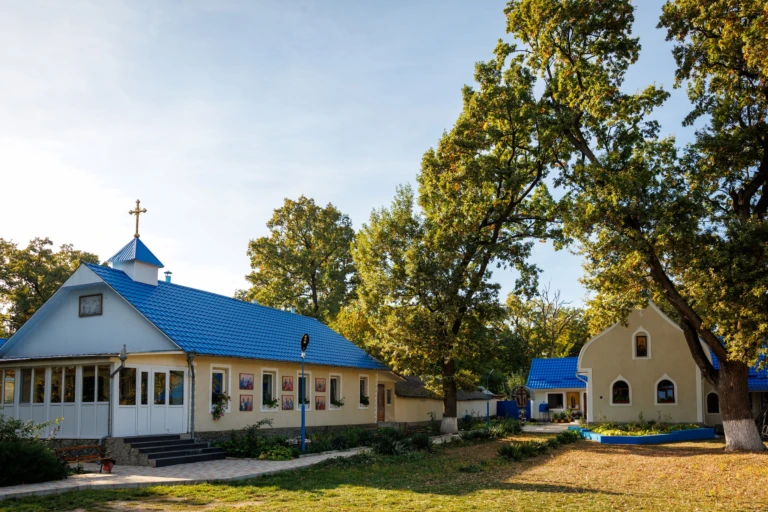
Founded in 1774, reopened in 1992 and reorganised in 2005 as a convent. It stands about 3 km from the village, in the middle of the forest — a place of pilgrimage and host of the festival dedicated to Ștefan cel Mare.
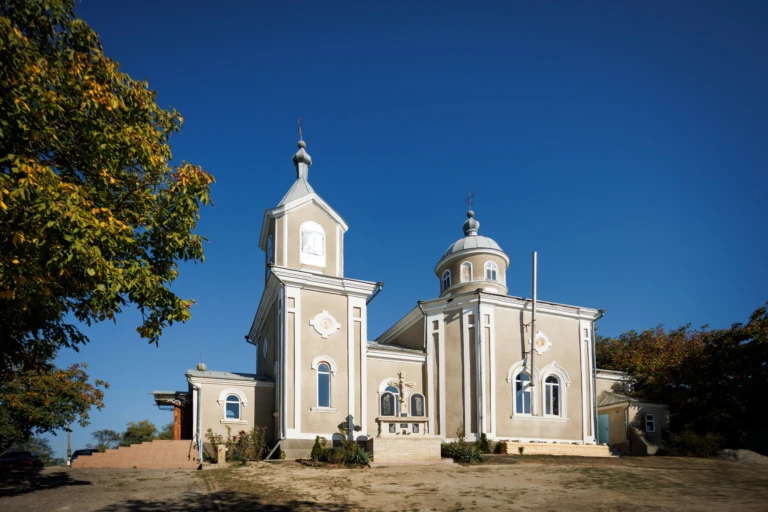
Built in 1885, it overlooks the village cemetery. It is listed in the Register of monuments protected by the state of the Republic of Moldova (no. 1089).
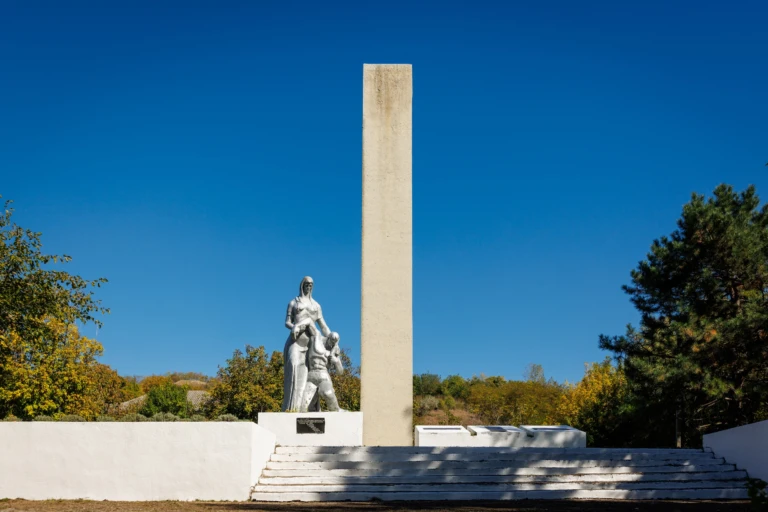
Raised in 1975 in memory of 141 fellow villagers who fell in the war. A place of annual commemoration, next to the House of Culture. Listed in the Register of monuments protected by the state (no. 1090).
A protected woodland sector of 7 ha, with downy oak ( Quercus pubescens ) — one of the northernmost stands of its kind in the Republic of Moldova.
The school in Călinești bears the name of Gheorghe Vrabie, the author of the State Coat of Arms of the Republic of Moldova.
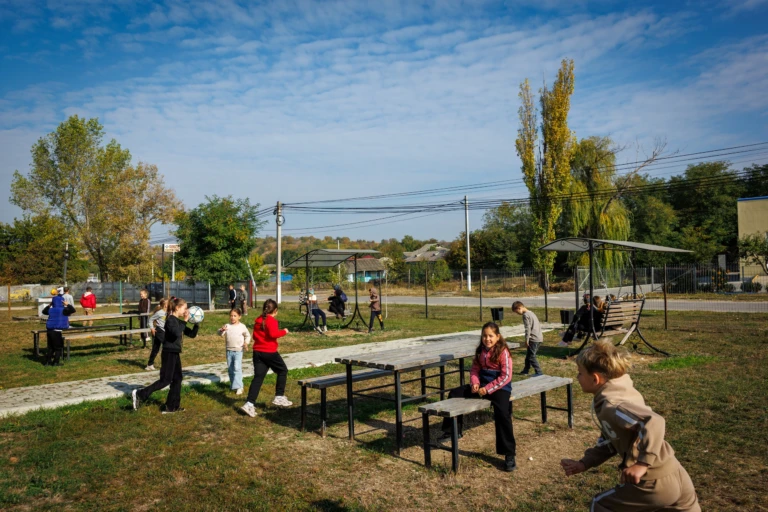
A multifunctional public space for recreation and for interaction between the generations, laid out with a summer stage.
A scientific reserve since 1993, in the Prut floodplain — one of the oldest floodplain forests in Europe.
A floodplain landscape of pools and lakes rich in fish. The Camenca, a tributary of the Prut, runs through Chetriș village.
Public institutions and points of interest in the commune. Tap a marker — or the location of a landmark above — to find it on the map.
The three villages have given the country recognised artists, scholars, doctors and sportspeople. Tap any of them for the full biography.
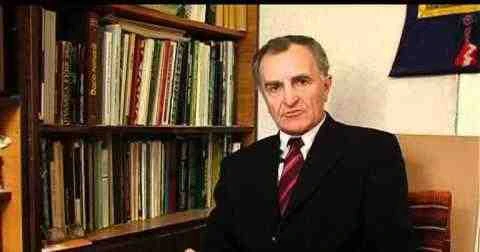
Author of the State Coat of Arms of the Republic of Moldova
Find out more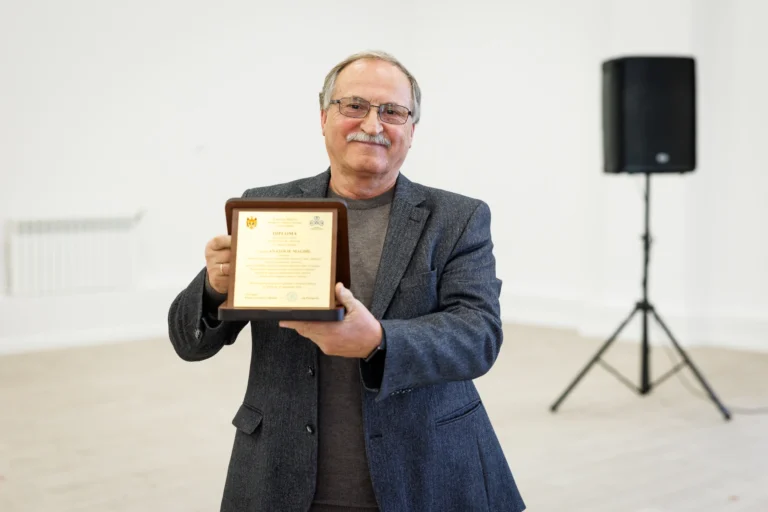
People’s Artist · Master choreographer
Find out more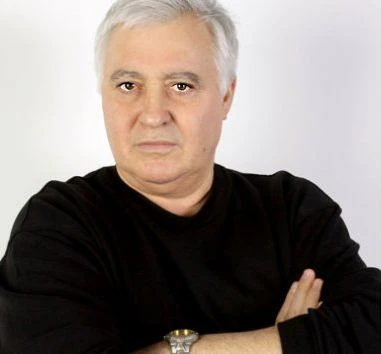
People’s Artist · Actor
Find out more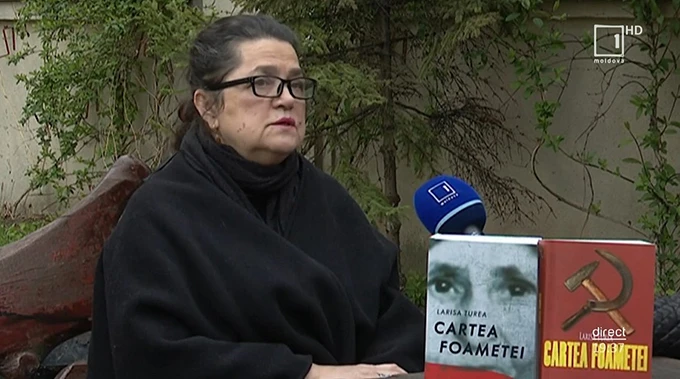
Journalist and art critic
Find out more
Armwrestling champion
Find out more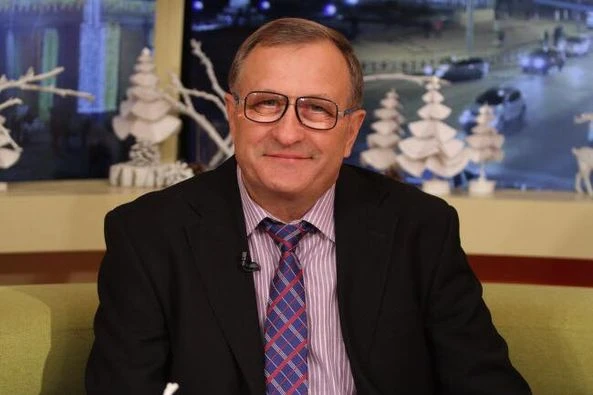
Musician · „Lăutarii” Orchestra
Find out more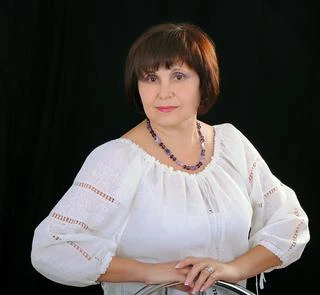
Poet and literary critic
Find out more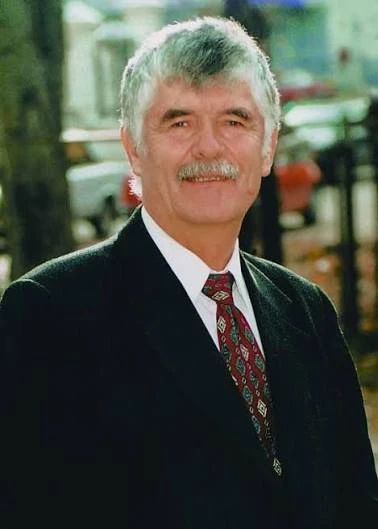
Film-maker and photographer
Find out moreDoctor · Health insurance
Find out moreDoctor of Economics
Find out more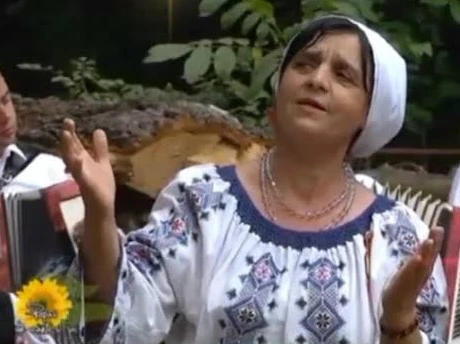
Poet and performer
Find out more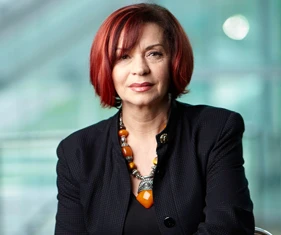
Actress
Find out moreWe use essential cookies for the website to function and, with your consent, analytics cookies to improve it. You can accept or reject optional cookies. Privacy policy.